October 2, 2025
The Critical Role of Wind Data in Autonomy
For Uncrewed Vehicles (UXVs), whether airborne (UAVs), surface-based (USVs), or subsea, the quality of onboard wind data directly impacts mission strategy, energy efficiency, and overall system performance. From stable flight paths to precise navigation and station-keeping, accurate wind measurement is mission-critical (WMO Guide, 2023).
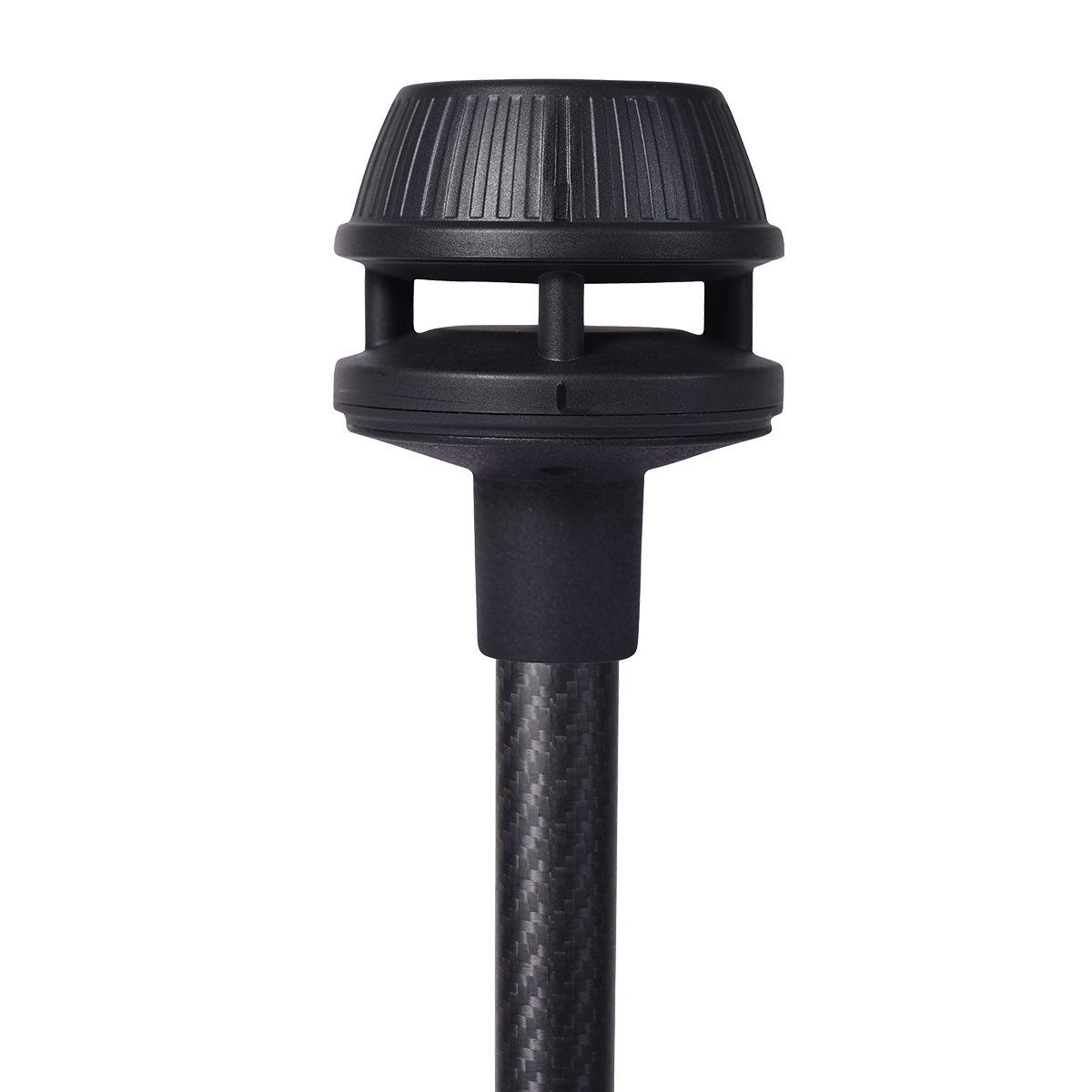
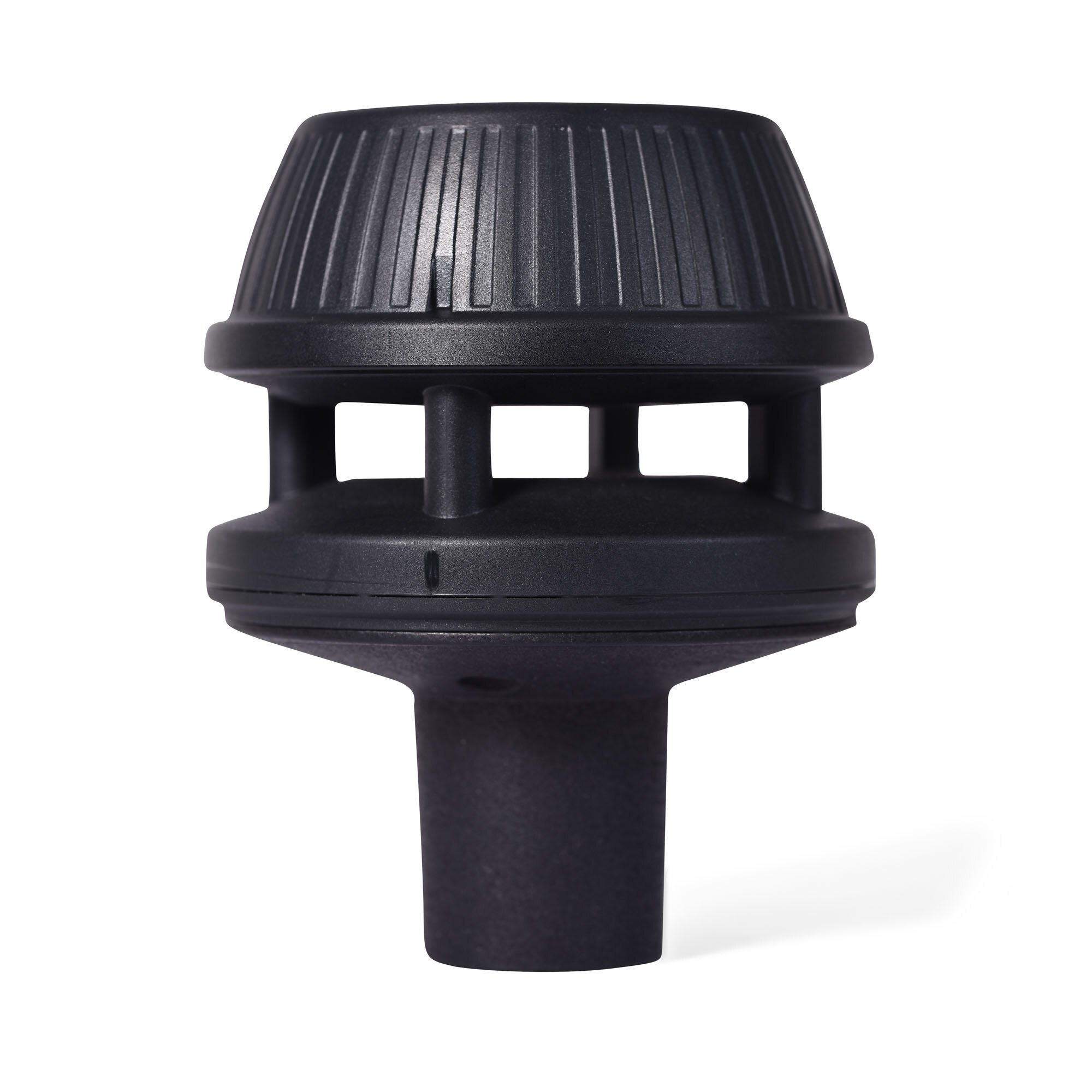
Many platforms rely on pitot-tubes, which are widely valued for their airspeed measurement. However, in remote or harsh environments, pitot systems can face challenges such as clogging, icing, and require regular maintenance (FAA Advisory Circular 43-6D, 2017). FT Technologies' ultrasonic wind sensors, powered by proprietary Acu-Res® technology, address these environmental challenges through solid-state, maintenance-free design suitable for autonomous platforms and extreme-environment applications.

Pitot Tube vs. FT Ultrasonic Wind Sensor for UXVs
UAVs and UAMs tend to cruise at lower airspeeds than other aviation. Additionally, UAV and UAM platforms that must slow down for package delivery or transition between horizontal and vertical flight require precise measurement at low airspeeds. FT acoustic resonance sensors maintain accuracy from 0 to 75m/s (145 knots). UXVs are highly-vibrational platforms producing intense noise; acoustic resonance is the only ultrasonic technology which is immune to vibrations and noise.
| Feature | Pitot Tube | FT Ultrasonic Wind Sensor |
| Measurement Principle | Measures air pressure differential with a square root relationship to forward airspeed causing increased measurement errors at low airspeeds (NASA Glen Research Center) | Measures wind data via Acu-Res® technology. This is an entirely non-contact measurement method which is linear throughout the measurement range. |
| Moving Parts | None, but prone to wear and clogging | None (solid-state) |
| Environmental Vulnerability | Icing, dust, salt spray, insects, water | Resistant to icing, sand, rain, salt, EMC interference |
| Response Time | ≈10Hz output rate | 10Hz output rate |
| Response to Gusts | Slow | Fast |
| Maintenance | Requires frequent cleaning and calibration | Maintenance-Free |
| Weight and Power | Heavier, requires complicated pitot plumbing | Lightweight (252g), low power (<30mA typical) |
| Data Output | Airspeed only | Wind speed, direction, temperature, barometric pressure, acceleration, configurable outputs (NMEA, RS422) |
Pitot Tube Airspeed Systems: How They Work and Where They Fall Short
A pitot tube airspeed system measures fluid flow speed by comparing stagnation (total) pressure — the pressure of air forced into the tube as a vehicle moves — with static pressure from the surrounding atmosphere. The difference represents dynamic pressure, which can be converted to airspeed using Bernoulli's principle (Anderson, Fundamentals of Aerodynamics, 2016). Pitot tubes have long been the standard for measuring airspeed in aviation and are also adapted for marine applications such as speed-through-water (STW) logging.
However, for UXVs and autonomous platforms, pitot systems present several operational challenges. At lower airspeeds typically below 40knots, the pressure differential measured by pitot systems becomes very small, making pitot measurements more susceptible to error and noise. In contrast, acoustic resonance wind sensors maintain accuracy and responsiveness in this low-speed regime.
Clogging Risk: Dust, insects, or debris can obstruct the tube openings, leading to inaccurate or lost readings; an issue highlighted by the Federal Aviation Administration in their Advisory Circular 43-6D (2017).
Icing Hazard: Frozen pitot tubes can lead to unreliable or lost airspeed data, an initiating factor in accidents such as Air France Flight 447.
Limited Vector Capability: Pitot systems primarily measure forward airspeed; obtaining full wind vectors (direction and crosswind components) requires additional sensors or assumptions.
Maintenance Requirements: Pitot systems typically require periodic calibration, cleaning and inspections; burdensome especially in remote or inaccessible installations.
These challenges do not negate the fundamental utility of pitot-systems as they remain an important instrument in aviation. In the context of remote, unmanned platforms, these drawbacks can make it useful to supplement pitot systems with additional sensing technologies.
Why Wind Data Matters for UXVs
UAVs and Fixed-Wing Drones
Enhanced Autopilot Stability: Accurate wind data improves flight control algorithms (ArduPilot Documentation) and extends endurance. Continuous wind feedback aids dynamic positioning control systems. The 360 degree measurement provides instantaneous dynamic information for gust-avoidance, enhancing overall safety.
Crosswind Safety: Real-time wind vectoring ensures safer autonomous takeoffs and landings.
Mission Accuracy: Wind compensation reduces drift during mapping, ISR, and precision delivery. It improves navigation in GNSS- denied environments.
USVs and ASVs (Autonomous Surface Vessels)
Precise Station-Keeping: Continuous wind feedback improves dynamic positioning accuracy.
Energy Efficiency: Optimises propulsion use for long-duration missions.
Operational Safety: Enhances navigation in gusty or high-current conditions.
Ground and Hybrid Platforms
Sensor Fusion: Combine wind data with GPS/INS for superior trajectory planning, and navigation in GNSS-denied environments.
Mission Continuity: Operate with confidence in sandstorms, polar conditions, or heavy precipitation.
Integration Made Simple
FT Acu-Res® ultrasonic wind sensors provide outputs in industry-standard protocols (NMEA, MODBUS, RS422/485), allowing seamless integration with autopilots, flight controllers, mission computers, and navigation systems. The world's most tested wind sensor to withstand extreme temperatures (-40°C to +85°C), vibration, shock, and EMC challenges.
FAQs
Q1: What are the operational limitations of pitot tubes in remote or autonomous systems?
Pitot tubes can ice over, clog, or fail in dusty/sandy environments. They require frequent cleaning and calibration, which is impractical for remote or autonomous operations (Federal Aviation Administration, Advisory Circular 43-6D, 2017).
Q2: How do ultrasonic wind sensors improve mission safety?
FT wind sensors deliver real-time, accurate wind speed and direction with no moving parts, enabling better autopilot control, safer landings, and improved mission success rates (WMO Guide, 2023).
Q3: Are FT wind sensors suitable for small UAVs?
Yes. FT wind sensors are lightweight, compact, and have low power draw, making them ideal even for small fixed-wing or VTOL drones.
Q4: Can FT wind sensors be used on helicopters?
Yes. FT sensors are frequently deployed on rotary-wing platforms during test and evaluation flights, where precise wind measurement is critical. They are not certified for use on commercial passenger aircraft.
References and Further Reading:
ArduPilot Documentation - Airspeed Sensors
https://ardupilot.org/plane/docs/airspeed.html
Anderson, J.D. (2016) Fundamentals of Aerodynamics (6th ed.) New York: McGraw-Hill. ISBN: 978-1260456547.
Federal Aviation Administration (2017). AdvisoryCircular 43-6D: Altitude Reporting Equipment and Transponder System Maintenance and Inspection Practices. Retrieved from
https://www.faa.gov/documentLibrary/media/Advisory_Circular/AC_43-6D.pdf
NASA Glenn Research Center - Pitot Tube Theory https://www1.grc.nasa.gov/beginners-guide-to-aeronautics/pitot-static-tube-speedometer/ (Accessed October 2, 2025)
World Meteorological Organisation (2023). Guide to Instruments and Methods of Observation (WMO-No.8). Geneva, Switzerland. Available at: https://library.wmo.int/records/item/41650-guide-to-instruments-and-methods-of-observation (Accessed October 2, 2025)

Acu-Res® Technology
FT Technologies' Acu-Res® technology delivers a signal-to-noise ratio more than 40dB stronger than conventional ultrasonics, ensuring reliable data in the harsh, dynamic environments where unmanned systems operate. With certified EMC immunity, a compact form factor, and ultra-low power consumption, FT sensors address the challenges that pitot-based systems cannot, making them ideal for critical UAV payloads where every gram and watt count.
If you're exploring how to equip existing or next-generation autonomous platforms with robust wind sensing, FT application engineers can help. Get in touch to discuss your requirements and integration needs.