---
title: Navigation Systems | FT Technologies
description: Rely on FT wind sensors in navigation systems to deliver accurate data for safety, efficiency and route optimisation in tough environments.
image: https://fttechnologies.com/hubfs/Ultrasonic%20Anemometer%20Solid%20State.jpg
---

# Navigation Systems

Accurate wind data is essential for both partial and fully automated navigation systems, enhancing route optimisation, energy conservation, and safety. By integrating real-time wind speed and direction, vessels can adjust their course to minimise drag, reduce fuel consumption, and avoid hazardous conditions. With advanced wind sensors providing reliable, up-to-date information, navigation systems can make precise decisions, leading to smoother operations and lower operational costs.
![Drone with FT Wind Sensor ](https://fttechnologies.com/hs-fs/hubfs/FT%20Tech%20-%20Blend/Pages/Application/FT-Drone-Navigation-Systems.png?width=1350&height=1398&name=FT-Drone-Navigation-Systems.png)

![](https://fttechnologies.com/hubfs/FT%20Tech%20-%20Blend/Pages/Module%20reference/FT%20Waves%20(1).svg) ![](https://fttechnologies.com/hs-fs/hubfs/FT%20Tech%20-%20Blend/Background%20elements/hero-large-wave-tablet-1.png?width=928&height=522&name=hero-large-wave-tablet-1.png) ![](https://fttechnologies.com/hs-fs/hubfs/FT%20Tech%20-%20Blend/Background%20elements/hero-large-wave-mobile-1.png?width=767&height=688&name=hero-large-wave-mobile-1.png)

## Why choose FT

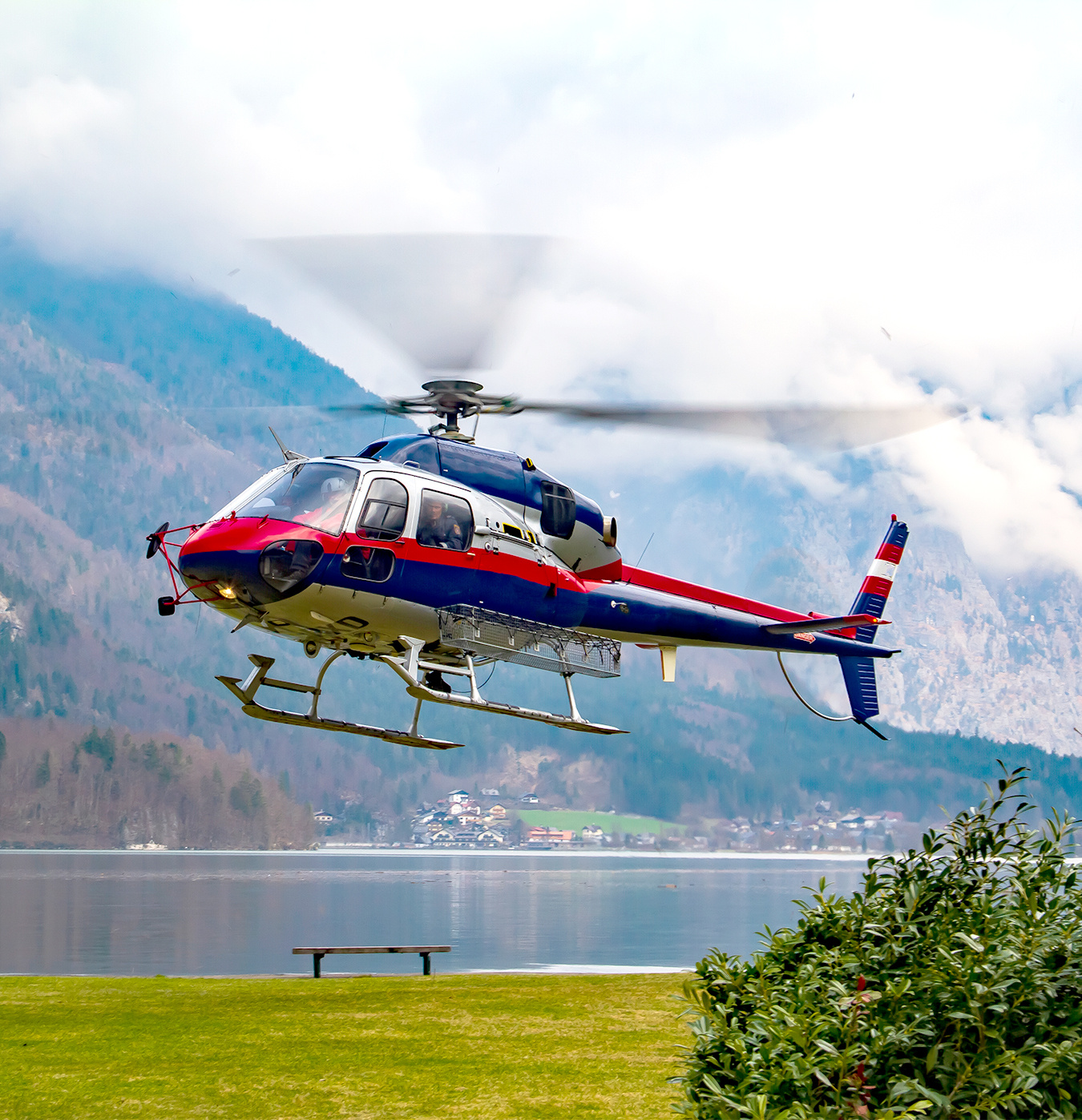
FT's wind sensors are designed to withstand vibration and acoustic noise, making them ideal for ground-based, airborne and naval navigation systems. Helicopters, for instance, generate significant rotor vibrations and noise, which can interfere with sensor measurement accuracy. By being resistant to these disturbances, FT’s sensors ensure accurate and reliable wind data even in the harshest operational environments. This precise 360 degree data is crucial for accurate navigation, maintaining stability, and ensuring safe landings, particularly in challenging conditions such as crosswinds or turbulence.

![Dynamic-Positioning-Systems-Navigation-Systems-FT-Wind-Sensor](https://fttechnologies.com/hs-fs/hubfs/Dynamic-Positioning-Systems-Navigation-Systems.jpg?width=1350&height=1398&name=Dynamic-Positioning-Systems-Navigation-Systems.jpg)![Aerospace-Navigation-Systems-FT-Wind-Sensor](https://fttechnologies.com/hs-fs/hubfs/FT%20Tech%20-%20Blend/Pages/Application/Aerospace-Navigation-Systems.jpg?width=1350&height=1398&name=Aerospace-Navigation-Systems.jpg)![FT-Drone-Navigation-Systems-Anemometer](https://fttechnologies.com/hs-fs/hubfs/FT%20Tech%20-%20Blend/Pages/Application/FT-Drone-Navigation-Systems.png?width=1350&height=1398&name=FT-Drone-Navigation-Systems.png)

- ###### Dynamic Positioning Systems (DPS)


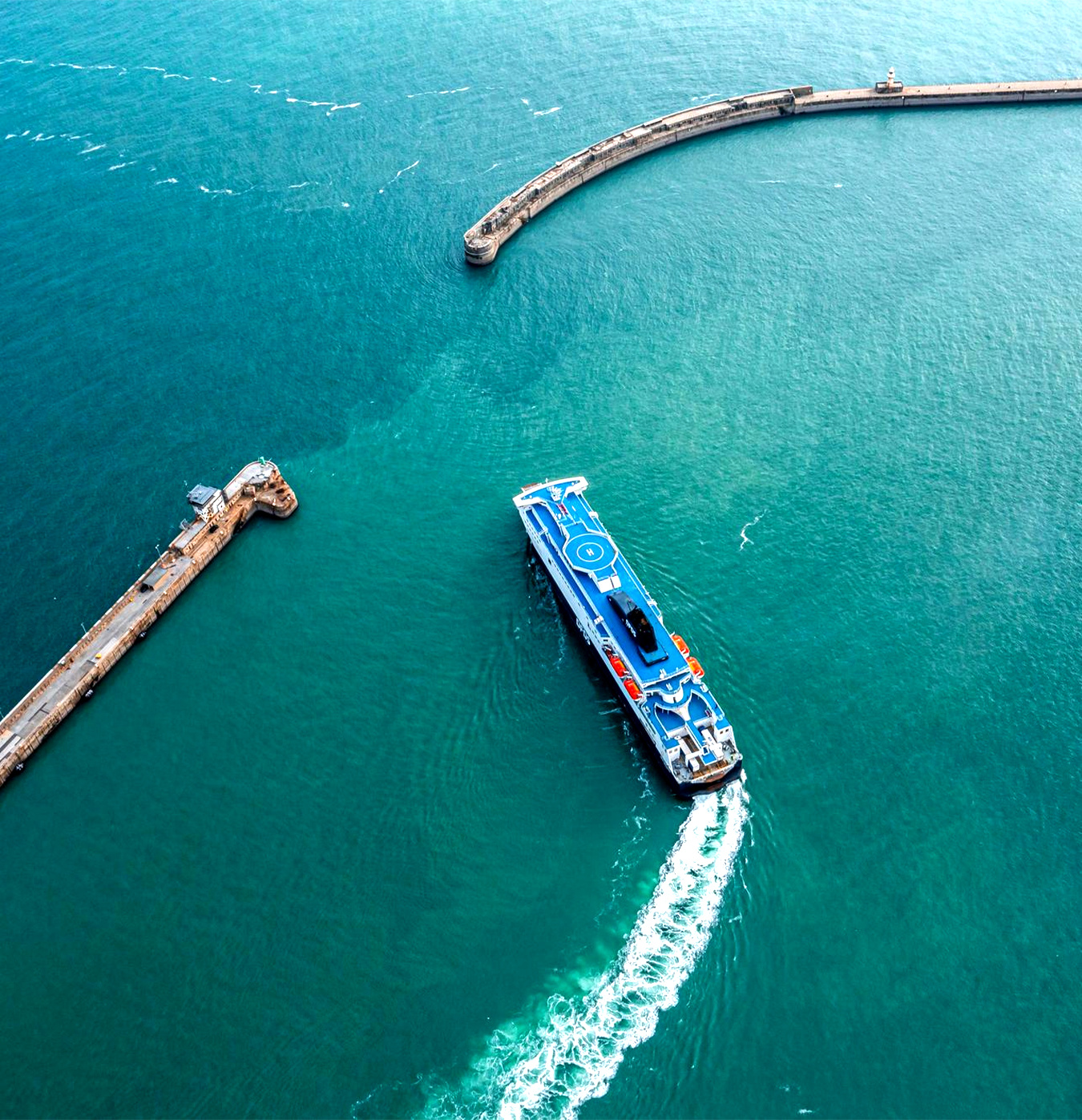
  Dynamic positioning systems combine wind and other sensors with thrusters and GPS to maintain a vessel’s position, allowing for continued operation even in challenging conditions. By continuously compensating for wind, waves, and currents, these systems keep the vessel steady without the need for anchors. This precise control is vital for critical operations such as offshore drilling, underwater construction, and marine research, where stability is crucial for ensuring safety and operational accuracy.


  ![Dynamic-Positioning-Systems-Navigation-Systems-FT-Wind-Sensor](https://fttechnologies.com/hs-fs/hubfs/Dynamic-Positioning-Systems-Navigation-Systems.jpg?width=1350&height=1398&name=Dynamic-Positioning-Systems-Navigation-Systems.jpg)
- ###### Aerospace


  In aircraft navigation, wind sensors monitor potentially hazardous crosswinds, particularly during low-speed manoeuvres when pressure-based systems such as Pitot tubes are less effective. Accurate wind measurement in 360 degrees is critical for ensuring safe take-off, hoverings and landings in challenging wind conditions.


  ![Aerospace-Navigation-Systems-FT-Wind-Sensor](https://fttechnologies.com/hs-fs/hubfs/FT%20Tech%20-%20Blend/Pages/Application/Aerospace-Navigation-Systems.jpg?width=1350&height=1398&name=Aerospace-Navigation-Systems.jpg)
- ###### Drones


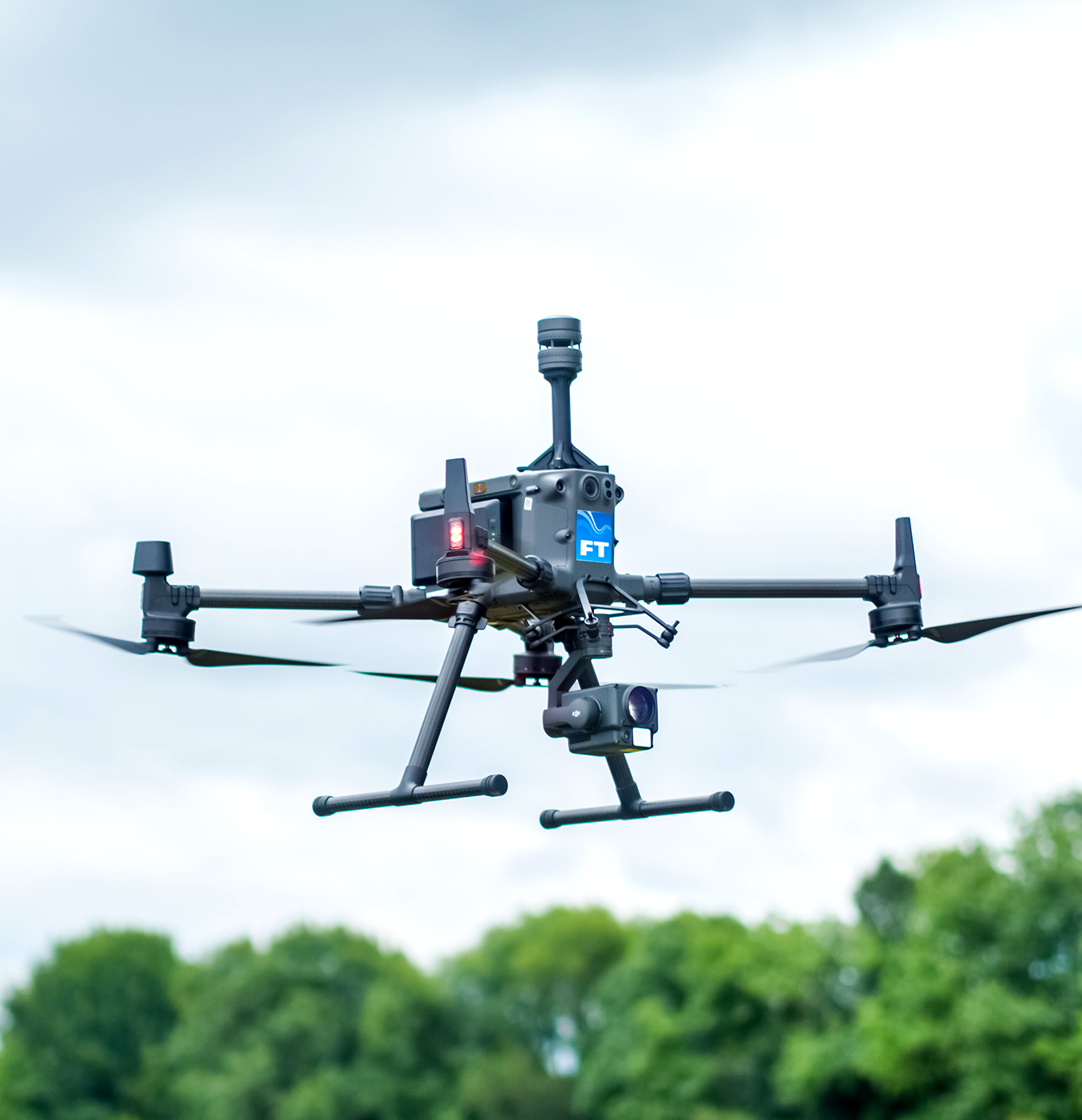
  Wind sensors can be used for a variety of applications on drones. As meteorological measurement sensors, they provide dynamic hyper-local information about winds aloft which can inform safe operational environment for drone light shows, conditions around wildfires, or flux dynamics for methane emissions.
  
  As control system sensors, they can be paired with INS resulting in highly accurate navigation in GNSS-denied environments.


  ![FT-Drone-Navigation-Systems-Anemometer](https://fttechnologies.com/hs-fs/hubfs/FT%20Tech%20-%20Blend/Pages/Application/FT-Drone-Navigation-Systems.png?width=1350&height=1398&name=FT-Drone-Navigation-Systems.png)

![](https://fttechnologies.com/hubfs/FT%20Tech%20-%20Blend/Background%20elements/FT%20Waves-Dark-BG-Transparent.svg)

## Technology

Unique to FT wind sensors, Acu-Res® software automatically compensates for changes in air temperature, pressure, and humidity to ensure data continuity.

[ Read more about our technology ](https://fttechnologies.com/technology)

![FT7 Reliable Anemometer in Icing Climate](https://fttechnologies.com/hs-fs/hubfs/FT%20Tech%20-%20Blend/Pages/Products/ice-ring-FT7.png?width=947&height=785&name=ice-ring-FT7.png)

![FT7 series wind sensor](https://fttechnologies.com/hs-fs/hubfs/FT%20Tech%20-%20Blend/Pages/Homepage/Image.png?width=1120&height=908&name=Image.png)

#### FT7 Series

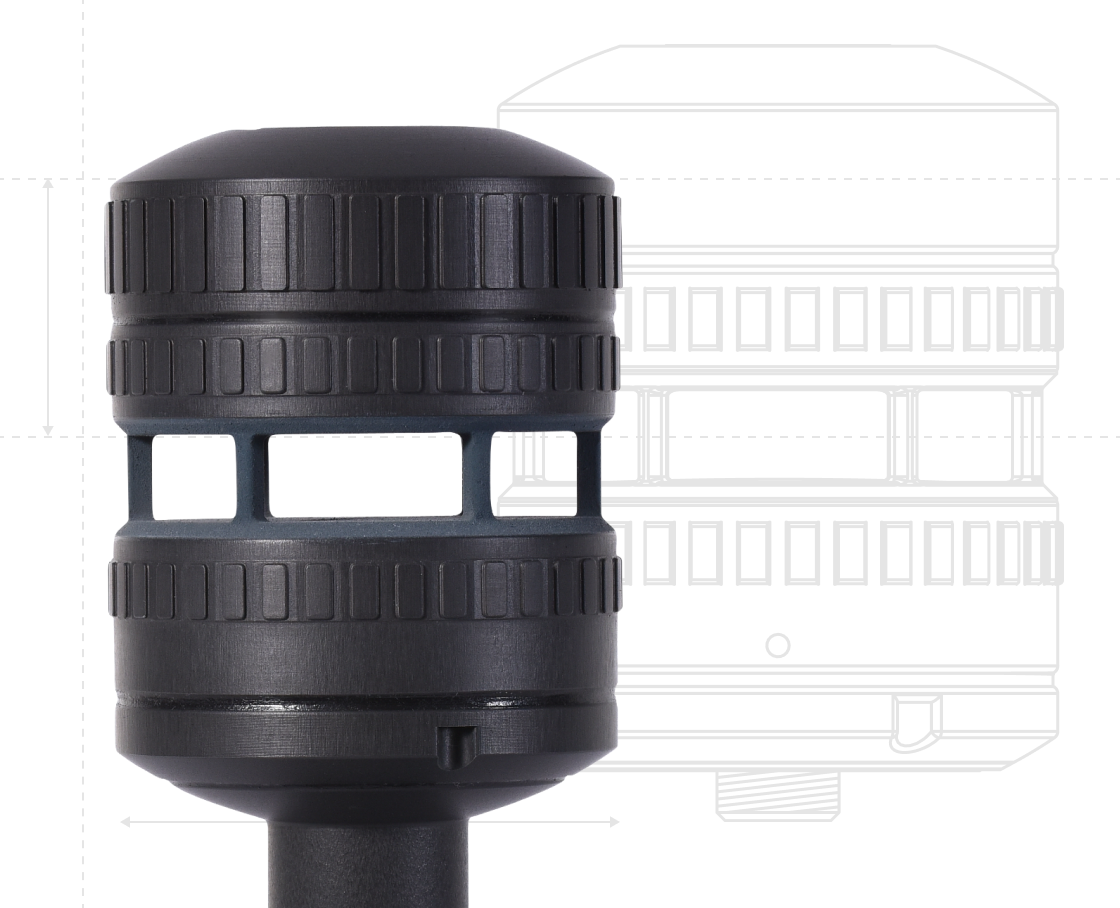
FT7 Series wind sensors are the fit-and-forget solution for maintenance-free operation year-round, even in the harshest conditions.

[ Find out more](https://fttechnologies.com/ultrasonic-anemometers/ft7-series)

![FT6 series wind sensor ](https://fttechnologies.com/hs-fs/hubfs/FT%20Tech%20-%20Blend/Pages/Homepage/Image%20(1).png?width=1120&height=908&name=Image%20(1).png)

#### FT6 Series

FT6 Series wind sensors are designed for professional performance while minimising weight impact on the end user.

[ Find out more](https://fttechnologies.com/ultrasonic-anemometers/ft6-series)

## Case studies

![](https://fttechnologies.com/hs-fs/hubfs/FT%20Tech%20-%20Blend/Pages/Case%20studies/Scout%20Drones/Scout%20Drones.png?width=1280&height=506&name=Scout%20Drones.png)

#### Scout Drones:

A Case Study by Łukasiewicz – Institute of Aviation

[ Read more ](https://fttechnologies.com/case-studies/scout-drones-lukasiewicz)

[ See all case studies](https://fttechnologies.com/case-studies)

Wind Speeds up to

90m/s

Ingress Protected to

IP67

Vibration Resistant up to

500Hz

## Certification

![](https://fttechnologies.com/hubfs/FT%20Tech%20-%20Blend/Icons/Certification/corrosion-icon-black.svg)

ISO 9227 (2006)

Corrosion Resistant: Tested to category C5-M High of BS EN ISO 12944 (1998) in a neutral salt spray atmosphere for 1440 hours.

[ View certificate ](https://fttechnologies.com/hubfs/FT%20Tech%20-%20Blend/Product%20certificates/Environment/Certificate-of-Test-Compliance-ISO-9227.pdf)

![](https://fttechnologies.com/hubfs/FT%20Tech%20-%20Blend/Icons/Certification/shock-icon-black.svg)

EN 60068-2-27 (2009)

Mechanical Shock Test Ea and CAF2656. Peak acceleration: 50g. Duration: 11ms. Pulse shape: half-sine.

[ View certificate ](https://fttechnologies.com/hubfs/FT%20Tech%20-%20Blend/Product%20certificates/Vibration/Test-Certificate-Drop-Shock-and-Vibration-Testing.pdf)

![](https://fttechnologies.com/hubfs/FT%20Tech%20-%20Blend/Icons/Certification/ingress-icon-black.svg)

ISO 20653:2013 IPX6K EN 60529 (1992+A2:2103)

Sealed to IPX6K, IP66 and IP67. Protected against high velocity water jets with increased pressure, access to hazardous parts and against solid foreign objects. Submerged in one metre depth of water for 30 minutes, and exposed to a dust chamber for 8 hours.

[ View certificate ](https://fttechnologies.com/hubfs/FT%20Tech%20-%20Blend/Product%20certificates/Waterproof/Test-Certificate-Ingress-Protection.pdf)

![](https://fttechnologies.com/hubfs/FT%20Tech%20-%20Blend/Icons/Certification/ice-icon-black.svg)

MIL-STD-810G

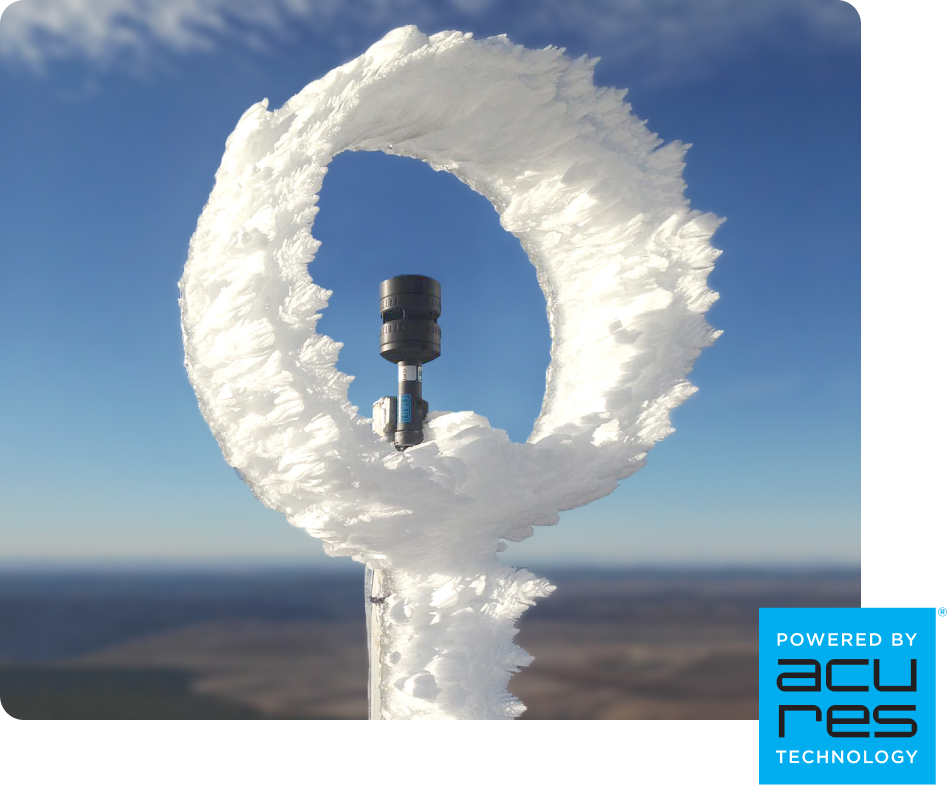
Anti-Icing Test: With the heater switched on, the sensor was exposed to freezing rain in an airflow of 15m/s at -15°C. Even when 37mm of ice had built up on the test bar the sensor itself remained ice-free. De-Icing Test: The sensor was ice-free in under 5 minutes.

[ View certificate ](https://fttechnologies.com/hubfs/FT%20Tech%20-%20Blend/Product%20certificates/Temperature/Icing-Test-MIL-STD-810G-742.pdf)

![](https://px.ads.linkedin.com/collect/?pid=2251801&fmt=gif)