March 12, 2026
The Question Every Cold-Climate Operator Asks
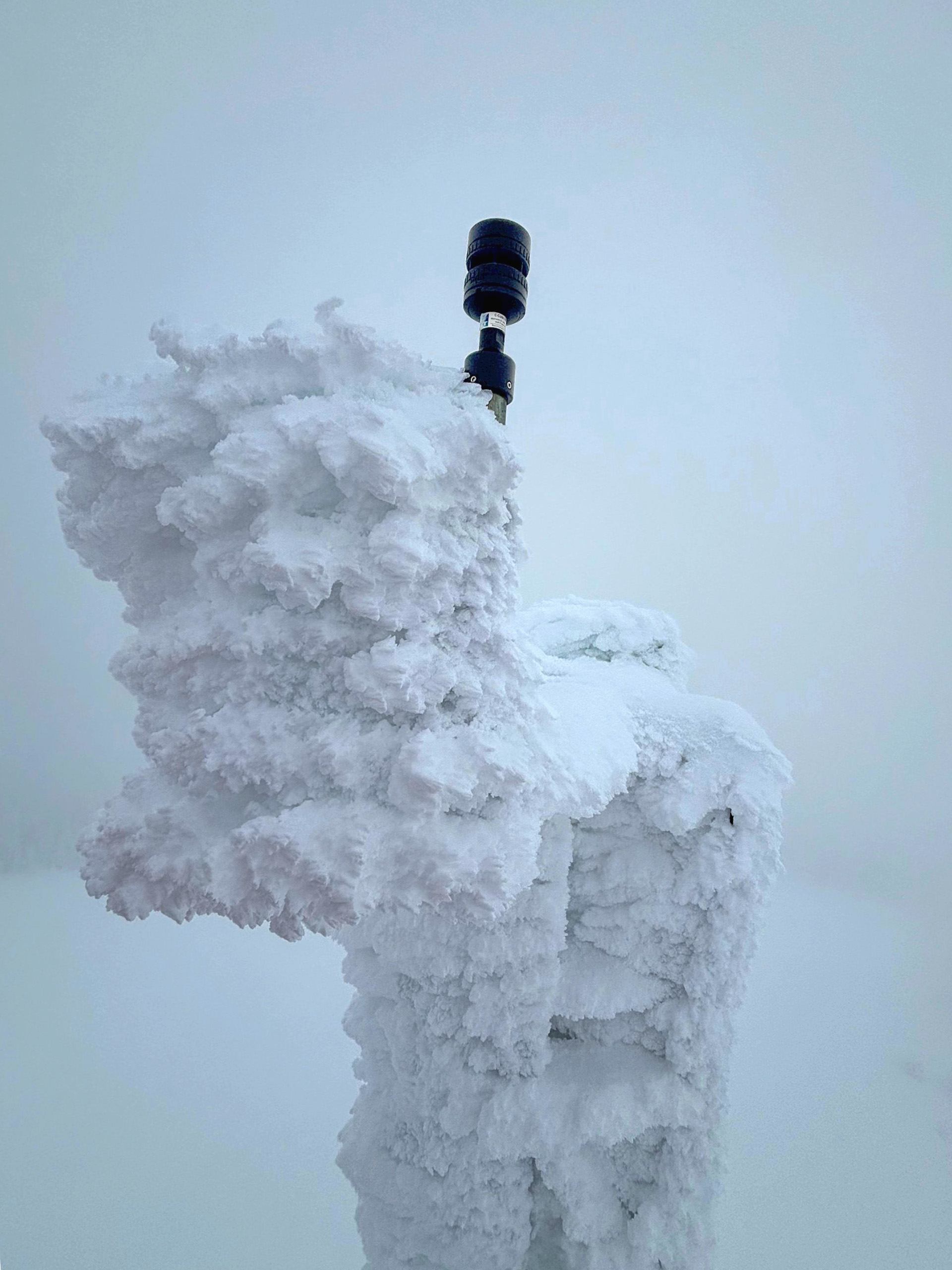
In cold climates, wind sensor icing is not a minor inconvenience, it is a direct cause of data loss, downtime, and revenue loss. So why do some large, high-power sensors still struggle to stay ice-free, while FT wind sensors manage it with lower installed power and fraction of the mass?
The answer lies in a fundamental principle of thermal physics: it is not how much heat you generate, it is how efficiently you concentrate and apply it.
"It's not about raw wattage; it's about watts per gram. FT's wind sensor design puts heat exactly where it is needed, in a sensor light enough to warm up fast and stay warm."
The Numbers: A Side-by-Side Comparison
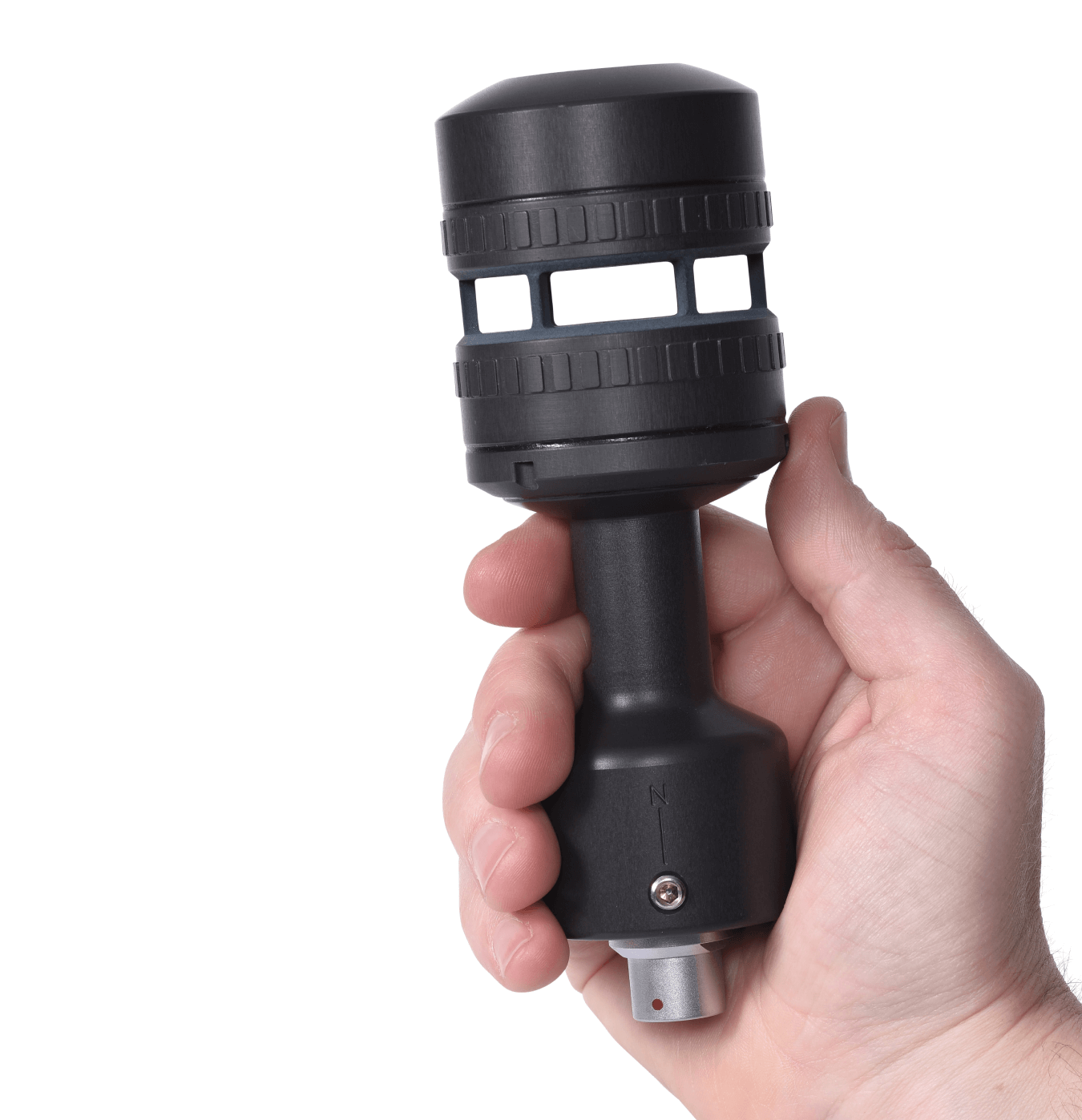
When you break down the heating performance of a typical competitor ultrasonic time-of-flight anemometer versus the FT ultrasonic Acu-Res® wind sensor, the difference is striking:
| Competitor Anemometer (Ultrasonic Time-of-Flight) | FT Wind Sensor (Ultrasonic Acu-Res®) | |
| Weight | 1600 g | 380 g |
| Heating Power | 240 W | 180 W |
| Watts per Gram | 0.15 W/g | 0.47 W/g |
| Heating Effectiveness | Baseline | 3 x more effective |
| Ice-Free Performance | Limited in extreme cold | Reliable in all conditions |
| Power Infrastructure | High demand | Minimal integration |
The FT wind sensor delivers 0.47 W of heating per gram of sensor mass, compared to just 0.155 W/g for a typical competitor unit. That is more than 3 times greater heating effectiveness from a sensor that uses less power overall.
Why Watts Per Gram is the Right Metric
Traditional comparisons focus on total heating wattage. But this ignores the thermal mass, the amount of material that needs to be heated and maintained above freezing. A heavier sensor requires more energy just to raise its own temperature, leaving less effective heat available at the critical surfaces where ice forms.
Thermal Mass: The Hidden Enemy of Ice Prevention
Think of it like heating two rooms. A large room with a powerful heater may still feel cold in the corners, while a small room with a modest heater stays uniformly warm. The FT wind sensors' 380 g design means:
-
Less material to heat, faster thermal response when temperature drops.
-
More uniform heat distribution across sensor surfaces.
-
Sustained warmth even in sustained sub-zero conditions.
-
Lower thermal lag, the sensor recovers quickly from cold gusts or preciptation events.
Competitor Sensors: A Structural Disadvantage
Large ultrasonic time-of-flight sensors typically feature extended arms, larger housings, and additional structural components that add significant mass. Each gram of extra material is a gram that must be heated, maintained, and that can act as a cold sink drawing warmth away from icing-prone surfaces.
At 1,600g and 240W, a typical competitor sensor requires 240 watts just to reach 0.15 W/g effectiveness. That is a large continuous power draw with diminishing returns on actual ice prevention.

How FT's Acu-Res® Technology Changes the Equation
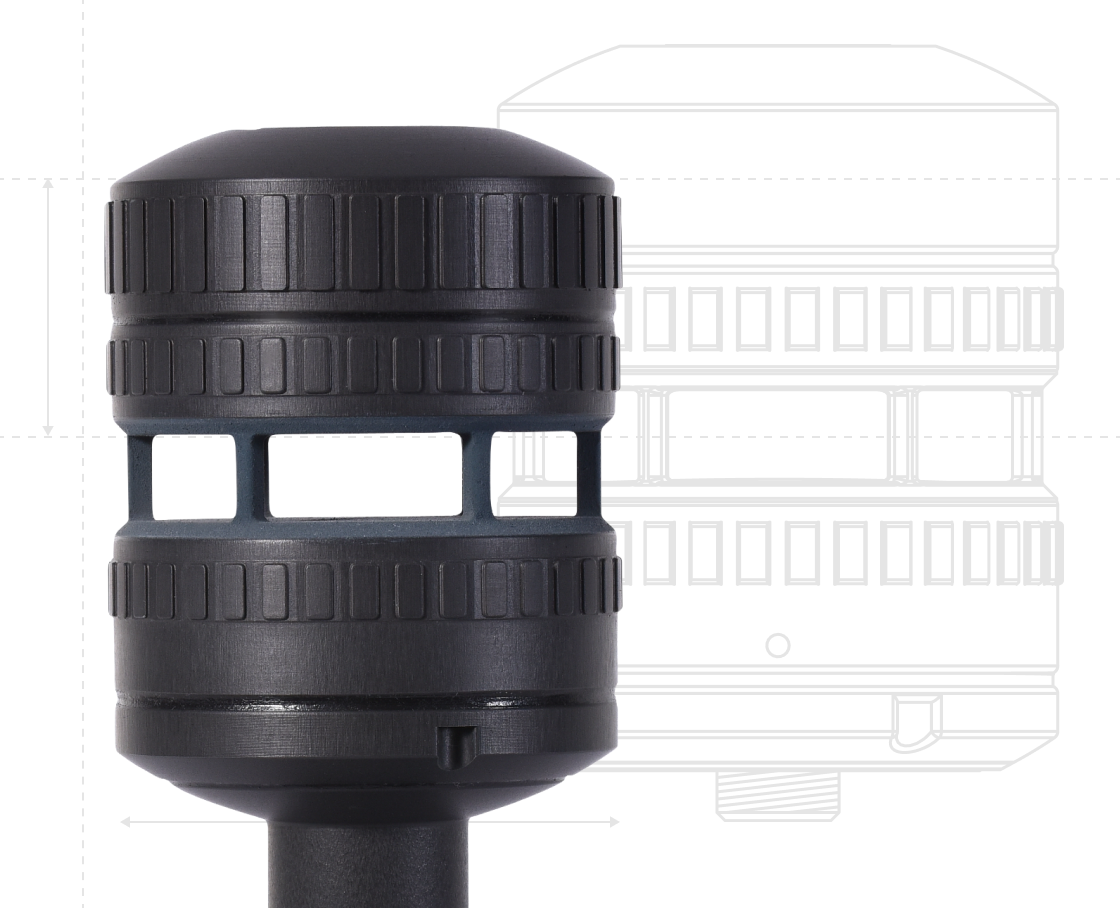
FT Technologies' patented Acu-Res® (Acoustic Resonance) measurement principle is fundamentally different from the time-of-flight detection. Rather than relying on the precise timing of acoustic pulses across long transducer paths (a method highly sensitive to ice accumulation on exposed surfaces), Acu-Res® uses a resonant cavity design.
Key Structural Advantages for Icing Resistance
- Compact, enclosed measurement cavity, fewer exposed surfaces where ice can accumulate and affect readings.
- Lower overall mass (380g), dramatically reduces the thermal mass that heating elements must overcome.
- Integrated, optimised heating circuit, 180 W applied to a small, targeted mass rather than distributed across a large structure.
- No exposed transducer faces to ice over, the measurement principle is inherently more robust to surface contamination.
Result:
180 W x (1 ÷ 380 g) = 0.47W/g3 X more heating effectiveness than a 240 W / 1,600 g competitor unit.
Ropeways & Mountain Transport: Where Ice Prevention Is a Safety Imperative
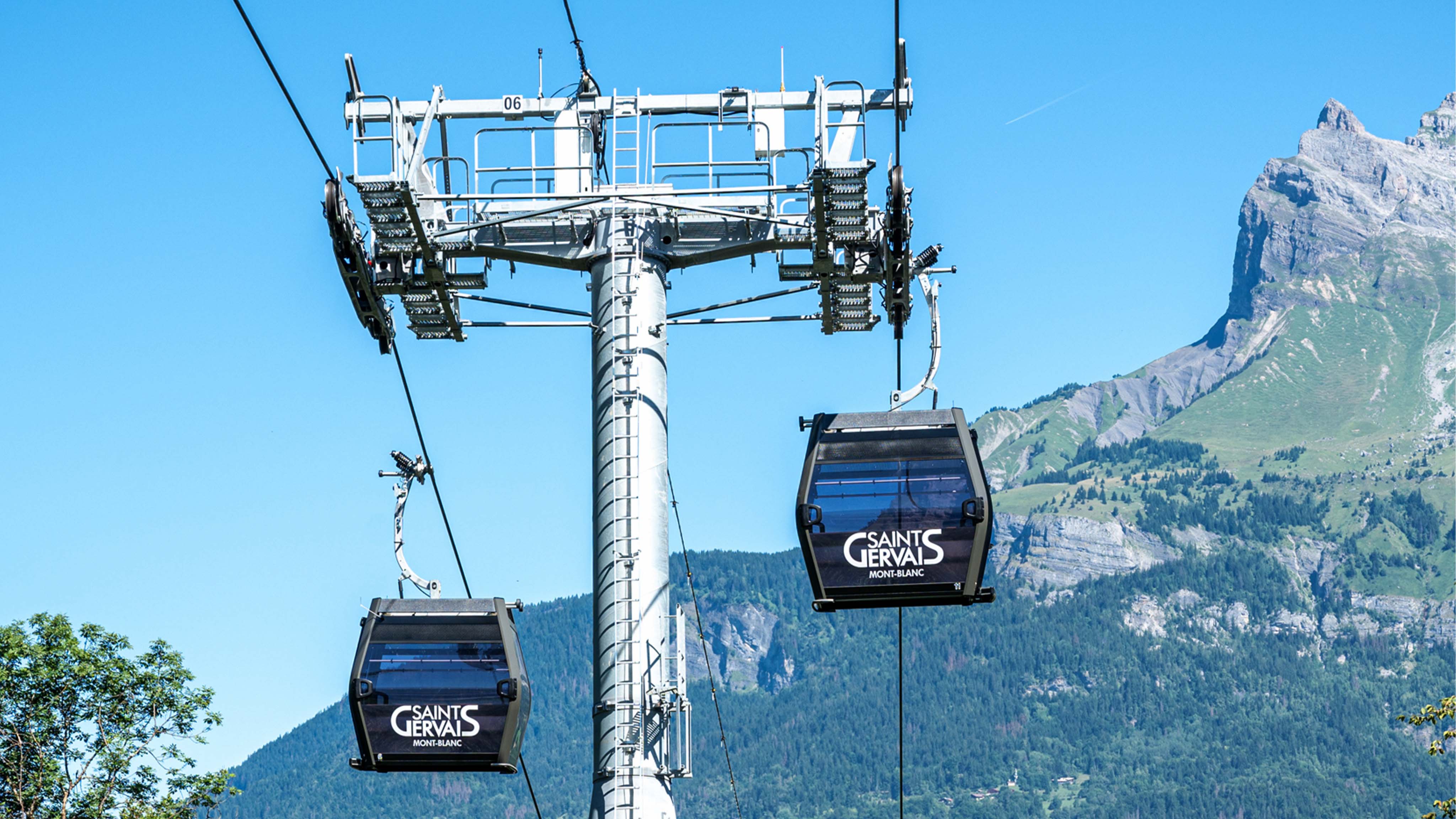
Cable cars, gondolas, and ski-lifts operate in precisely the environments where icing is most severe; high altitude, exposed ridgelines, and rapid weather changes. In these settings, wind measurement is not simply about energy yield; it is a direct safety input into operational decisions about whether a ropeway continues to run.
The Unique Challenge of Ropeway Wind Monitoring
Ropeways or Ski-lift operators face a combination of factors that make heating efficiency critical:
-
Sensors are mounted at exposed summit stations, often above the treeline, where temperatures regularly drop well below freezing for extended periods.
-
Power supply to remote summit installations is typically limited; large cable runs, small inverters, and constrained electrical budgets make a 240 W continuous heating load a genuine infrastructure problem.
- Safety regulations in many jurisdictions (including EN 12929 and national ropeway standards) require wind measurement systems to be operationally available at all times.
-
Icing events coincide precisely with the conditions that require most careful wind monitoring. If the sensor fails when it is most needed, the consequence is either unsafe operation or unnecessary shutdown.
Why Heating Efficiency Matters More at Altitude
At a ropeway summit station, a sensor drawing 180 W from a compact, low-mass design offers a meaningful advantage over a 240 W unit with four times the thermal mass. At altitude, ambient temperatures can sustain sub-zero conditions for hours or days. A sensor that heats to a safe operating temperature quickly, and maintains it efficiently, provides the continuous data reliability that ropeway safety management demands.
For ropeway operators specifying sensors for new installations or replacement programmes, the FT sensors' lower power demand also simplifies electrical design at remote stations, reducing cable sizing requirements and backup power capacity needed to guarantee operation during grid disturbances.
For ropeway safety systems, sensor uptime is non-negotiable. Heating efficiency is the difference between a sensor that keeps running in a storm and one that goes offline exactly when you need it most.
Performance Per Watt
In remote meteorological deployments, every watt and every gram counts. FT wind sensors' heating efficiency translates into longer deployment, fewer failures, and more complete datasets.
FAQs
Q1: Why does a lighter wind sensor perform better in icing conditions?
A lighter sensor has lower thermal mass, meaning its heating system raises and maintains the sensor temperature more efficiently. Less material needs to be heated, so a given wattage produces a greater temperature rise faster. The FT wind sensor at 380 g versus a 1,600 g competitor unit achieves this with 3x greater watts per gram effectiveness.
Q2: What is watts per gram and why does it matter for wind sensors?
Watts per gram (W/g) measures how much heating power is applied relative to the sensor's mass. It is a more meaningful performance metric than raw wattage alone, because it accounts for thermal mass, the material that must be heated before any warmth reaches icing-prone surfaces. A sensor with a high W/g ratio heats up faster and maintains ice-free surfaces more reliably.
Q3: Can an ultrasonic wind sensor prevent icing without large power draw?
Yes, if the sensor is designed with a compact, low-mass architecture. FT Technologies' Acu-Res® wind sensors demonstrate that 180 W applied to a 380 g sensor outperforms a 240 W applied to a 1,600 g sensor. The physics is straightforward: concentrate heat on less material, and you achieve superior ice prevention with lower power demand.
Q4: How does Acu-Res® technology compare to time-of-flight for icing resistance?
Time-of-flight sensors depend on acoustic pulses traveling between exposed transducers surfaces that are directly vulnerable to ice formation and can affect measurement accuracy when iced. Acu-Res® uses a resonant cavity, reducing exposed surface area and relying less on precise transducer surface conditions, making it inherently more robust in icing environments.
Q5: Why does the material of a wind sensor body affect its ice prevention performance?
The thermal conductivity of the sensor body determines how quickly and evenly heat generated by the internal heating element reaches the outer surfaces where ice forms. FT7 series wind sensors are constructed from anodised aluminium, which has significantly higher thermal conductivity than the steel bodies used in many competitor sensors. This means heat travels more rapidly from the heating element to the sensor surfaces, reducing the energy required to maintain an ice-free state and further improving the effective watts-per-gram advantage FT sensors hold over heavier, less conductive alternatives.
Q6: If an ultrasonic wind sensor has no moving parts, why does ice prevention still matter?
While the absence of moving parts eliminates the mechanical seizure risk associated with cup anemometers, ice formation remains a critical concern for a different reason: aerodynamic disruption. Ice accumulating on the sensor head alters the airflow passing through the measurement cavity, introducing inaccuracies into wind speed and direction readings even if the sensor itself continues to operate. FT wind sensors address this with a dedicated heater in the mounting assembly, specifically designed to ensure any ice build-up is contained well below the sensor head; keeping the airflow clean and undisturbed before it enters the measurement cavity where Acu-Res® technology takes its reading.

Conclusion: Design Efficiency Beats Raw Power
When customers ask why competitor sensors with higher wattage still ice up while FT wind sensors remain operational, the answer is in the physics. Raw power is not the deciding factor; power density relative to thermal mass is.
FT Technologies' Acu-Res® wind sensors achieve 0.47 W/g versus a competitor's 0.15 W/g. That 3x advantage in heating effectiveness is not a marketing figure, it is a direct consequence of purpose-built, compact sensor design that puts heat where ice forms, in a package light enough to stay warm.