January 29, 2026


Introduction
Wind sensors (Anemometers) are essential across industries from marine navigation to industrial safety systems and weather monitoring. Traditionally, many systems used mechanical wind sensors, but ultrasonic technologies are increasingly relied upon. However, ultrasonic is not a single technology and there are key differences within ultrasonic wind sensing itself. This article breaks down:
- Mechanical Wind Sensors
- Ultrasonic Wind Sensors (Time-of-Flight)
- Acoustic Resonance (Acu-Res®) Ultrasonic Wind Sensors


What is a Mechanical Wind Sensor / Anemometer?
In essence, mechanical or propeller-based anemometers operate using moving parts: rotating cups or propellers to measure wind speed and a vane to determine wind direction. While mechanical wind sensors can output data at a high rate under favourable conditions, their physical response to rapidly changing wind is limited by inertia, resulting in increased latency. Although mechanical anemometers have long been a standard solution, their reliance on moving components leads to wear over time, requiring regular recalibration, maintenance, and eventual replacement.
- Bearings and mechanical wear: Continuous exposure to wind, weather, and vibration may lead to fatigue, corrosion, or deterioration, resulting in decreased accuracy or complete failure.
- Wiring or electrical issues: Because the rotating parts generate electrical signals, they rely on wiring and connectors. Loose or corroded connections can cause intermittent or complete loss of signal and inaccurate readings, and mechanical wind sensors are also more vulnerable to damage from lightning strikes and electrical surges along the cabling.
- Impact damage: A collision or accidental contact can cause misalignment, bending, or component breakage, impairing its ability to rotate freely and provide accurate wind measurement.
- Accumulation of debris: The cups or propellers in mechanical anemometers accumulate dirt, dust, salt, or other debris, affecting the wind sensor’s rotation, leading to reduced sensitivity, inaccurate readings, or complete blockage of the moving parts.
- Ice formation: In colder climates or during winter sailing, the ice accumulation on the anemometer’s rotating components can cause obstruction or imbalance, resulting in inaccurate or non-responsive wind measurements. Ice formation also increases the weight on the sensor, leading to strain and damage.
- Corrosion: Exposure to saltwater, humidity, and harsh marine environments can cause corrosion on the wind sensor’s metal components including bearings, shafts, or connectors. Corrosion can impair the sensor’s movement, affecting its ability to rotate smoothly and generate reliable wind data.
Mechanical wind sensors may still be suitable for basic or low-maintenance environments, but for demanding applications they often fall short.
What is an Ultrasonic Wind Sensor?
Ultrasonic wind sensors are solid-state devices; they have no mechanical moving parts and instead use sound waves to determine wind speed and direction.
However, not all ultrasonic technologies are the same.
Time-of-Flight (ToF) ultrasonic wind sensors
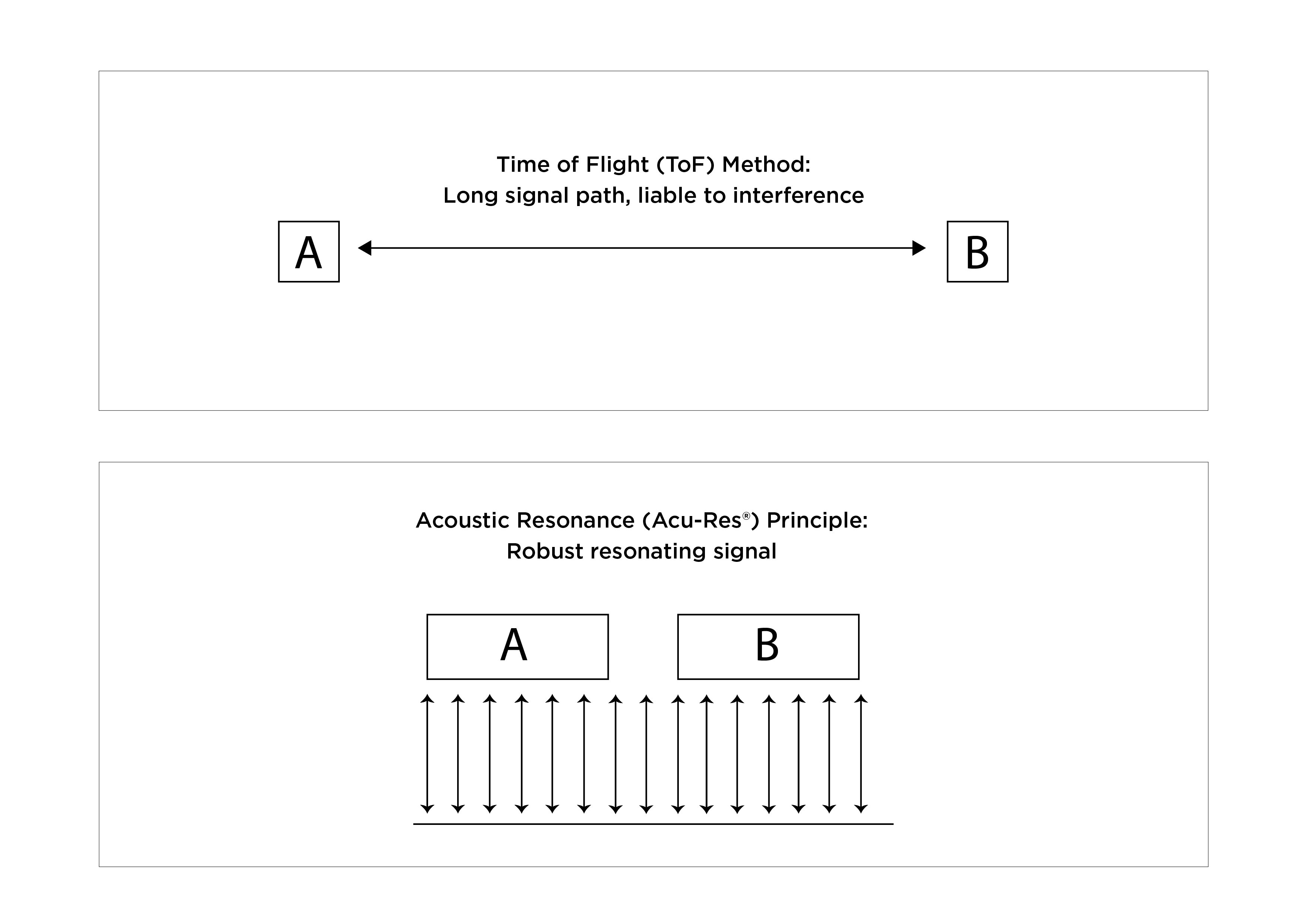
Traditional ultrasonic wind sensors send acoustic pulses between spatially separated transducers. The time it takes for sound to travel between these points changes when wind is present, and this difference is used to calculate wind speed and direction.
- Requires several centimetres of open measurement path between exposed transducers
- Can be sensitive to temperature, pressure, rain and humidity effects
- Performance may be affected by environmental interference along the acoustic path
- Exposed transducer geometry can be susceptible to physical obstruction or damage, including bird interaction in some installations
- Works well in general meteorological and other low-risk environments
Acoustic Resonance (Acu-Res®) ultrasonic wind sensors
FT Technologies uses a proprietary Acoustic Resonance (Acu-Res®) measurement method instead of Time-of-Flight (ToF). In this approach:
- Sound waves resonate within a small cavity
- Changes in the phase of the resonating wave caused by wind are used to measure wind speed and direction, creating a very strong low-noise signal that is easier to measure in challenging conditions.
- This compact cavity and resonant design make the sensor more resilient to interference and environmental noise than typical ToF ultrasonic sensors.
- Bonus: FT's latest Acu-Res® wind sensor models measure wind speed, direction, temperature, wind pressure, pitch, roll, and compass heading — all from a single compact unit. Ideal for dynamic marine and industrial platforms.
Put simply, both Time-of-Flight (ToF) and Acoustic Resonance (Acu-Res® ) are ultrasonic technologies, but Acu-Res® offers distinct performance advantages.
Conclusion:
Mechanical Wind Sensors: Most are well-suited to simple, low-cost, low-precision applications where periodic recalibration and component replacement are acceptable. Situations where maintenance is manageable and environmental conditions are benign.
Ultrasonic (ToF) Wind Sensors: Good for general meteorology and basic solid-state requirements as it offers improved performance over mechanical with minimal maintenance or replacement but may still be affected by environmental exposure in harsher installations.
Acoustic Resonance (Acu-Res®) Wind Sensors: Excellent for offshore and marine environments, industrial safety and control systems; dynamic and mobile platforms (e.g. crewed and unmanned vessels, offshore structures, drones and aerial systems).
Acoustic Resonance wind sensors provide high accuracy, rapid response, and exceptional durability in challenging conditions. With no recalibration or routine maintenance required, their compact, protected sensing design reduces exposure to environmental damage, resulting in greater long-term reliability and fewer sensor replacements. As a result, Acu-Res® wind sensors can deliver lower total cost of ownership over the lifetime of an installation, despite a higher initial investment.
Designed for some of the harshest operating environments, FT Acu-Res® wind sensors minimise failure modes associated with exposure and wear, helping extend service life and reduce replacement cycles.